

Instagram Facebook YouTube WhatsApp
Home / M.Sc. in Mathematics

M.Sc. in Mathematics

M.Sc. (Master of Science) • Mathematics

M.Sc (Master of Science) Mathematics Dehradun

A college which has given excellent results in the field of M.Sc Mathematics
Master of Science (M. Sc.) Mathematics is a postgraduate course in Mathematics. The course has a duration of 2-years, which is divided into four semesters. The main aim of the course is to cultivate a mathematical attitude and nurture the interests in students to motivate for research in mathematical and statistical sciences and to work on problems related to industrial development as well. In the first two semesters, the focus is on the basic courses in mathematics, such as Algebra, Topology, Analysis, and Graph Theory, along with the basic applied course on ordinary and partial differential equations. In the third and fourth semesters, the focus is on the special courses, elective courses, and skill-based courses, including Measure Theory and Lebesgue Integration, Modern algebra, Linear Integral equations. This course is affiliated to Sri Dev Suman University (Uttarakhand).

Duration: 2 Years
Stream: Science

    Apply Now

    Please fill out the form below to book your session counselling or inquire about available programs.

    By submitting, you agree to be contacted for counselling and admission support.

    Scope and Importance of M.Sc. Mathematics

    M.Sc. Mathematics develops strong analytical thinking and problem-solving skills that are valued in academics, industry, and government. The programme gives a solid base for higher studies and prepares students to handle data, models, and complex real-life problems with accuracy and logic.

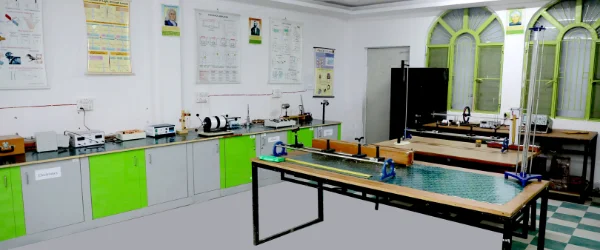
    BSc CBZ DD College Dehradun
    CBZ practical learning laboratories
    Foundation for Higher Studies

    M.Sc. Mathematics provides a strong base for higher degree programmes such as M.Phil. and Ph.D. in Mathematics and related areas. It prepares students for research-oriented careers in universities and institutes.

    Research Culture & Scientific Integrity

    The course trains students in mathematical research methods, logical reasoning and data analysis. It helps them understand research ethics, scientific integrity, and objectivity while working on projects and dissertations.

    Professional & Social Responsibility

    Through assignments, seminars and presentations, students learn to communicate mathematical ideas clearly and to use their knowledge responsibly in professional, social and economic contexts.

    M.Sc. Mathematics Job Opportunities

    M.Sc. Mathematics opens doors to a range of specialised job profiles in education, finance, analytics, research and industry. Graduates can choose careers that match their interest in teaching, quantitative analysis, programming, or applied mathematics.

    Teacher or Professor

    Teach mathematics at school, college or university level, guide students, and participate in academic activities and curriculum development.

    Quantitative Risk Analyst

    Work with banks and financial institutions to measure and manage financial risk using mathematical and statistical models.

    Mathematical Analyst

    Apply advanced mathematics to solve problems in finance, operations, engineering or data analysis, often supporting decision-making teams.

    Equity Quantitative Analyst

    Develop models for stock-market trading, pricing of equities and portfolio optimisation for investment firms and hedge funds.

    Director – Statistical Programming

    Lead teams that design and implement statistical programs, often in clinical research, pharmaceuticals or large data-driven organisations.

    Quantitative Developer

    Build and maintain software tools that implement complex quantitative and financial models, combining programming with mathematics.

    M.Sc. Mathematics Course Fee

    Semester fee and examination fee (as per University norms).

    Semester Fee
    Examination Fee
    ₹ 22500
    As per University Norms

    Explore Your Path to Success - Downloads

    Discover all the essential information to kickstart your journey with us. From detailed Fee Structures to easily accessible Admission Forms and our comprehensive Prospectus, we’ve got everything you need to plan your academic future. Click the buttons below to explore and take the first step toward a brighter tomorrow!

    Frequently Asked Questions

    Important course questions about duration, eligibility, curriculum, practicals, and careers.

    What are the eligibility criteria for admission to the M.Sc. in Mathematics?

    To be eligible for admission to the M.Sc. in Mathematics, candidates must have:

    • Bachelor’s degree in Mathematics or a related field (such as B.Sc. Mathematics or B.Sc. with Mathematics as a subject) from a recognized university.
    • A minimum of 50-55% aggregate in the undergraduate degree, though this may vary depending on the college.

    The curriculum for M.Sc. Mathematics includes a mix of core and elective subjects. Common topics include:

    • Abstract Algebra
    • Real Analysis
    • Complex Analysis
    • Linear Algebra
    • Topology
    • Numerical Methods
    • Differential Equations
    • Functional Analysis
    • Probability Theory
    • Mathematical Modelling
    • Additionally, students may have options to specialize in fields like applied mathematics or pure mathematics.

    Graduates with an M.Sc. in Mathematics can pursue a variety of career options, including:

    • Mathematician or Research Scientist
    • Data Analyst
    • Statistician
    • Operations Research Analyst
    • Actuary
    • Software Developer
    • Quantitative Analyst
    • Lecturer or Academic Professional

    Other opportunities exist in industries like financetechnologyeducation, and research institutions.

    Yes, many colleges offer scholarships based on merit or financial need. Some government programs and private organizations also provide scholarships for students pursuing postgraduate studies, including M.Sc. in Mathematics.

    During the M.Sc. in Mathematics, students will develop important skills such as:

    • Problem-solving and analytical skills
    • Logical reasoning
    • Quantitative and computational skills
    • Data analysis
    • Mathematical modeling
    • Research and technical writing

    These skills are essential for both research careers and jobs in industries like finance, technology, and education.

    APPLY NOW