
Instagram Facebook YouTube WhatsApp
Home / M.Sc. in Physics

M.Sc. in Physics

M.Sc. (Master of Science) • Physics

M.Sc. (Master of Science) Physics In Dehradun

Physics is the natural science that studies the matter and its motion and behavior through space and time and that studies the related entities of energy and force. The M.Sc. in Physics program at D.D. College, Dehradun, is a two-year postgraduate degree that provides students with a strong foundation in advanced concepts of physics, covering both theoretical and experimental aspects. The program is designed to foster deep analytical and research skills, making students proficient in understanding the core principles of physics and their applications. With a number of top institutions, universities, and research centers, Dehradun is a preferred destination for students seeking higher education in physics and other sciences. The M.Sc. Physics program in Dehradun is designed to provide a strong foundation in both classical and modern physics while fostering innovation, analytical thinking, and research skills.

Duration: 2 Years
Stream: Science

    Apply Now

    Please fill out the form below to book your session counselling or inquire about available programs.

    By submitting, you agree to be contacted for counselling and admission support.

    Scope and Importance of M.Sc Physics

    M.Sc Physics helps students build a strong understanding of advanced concepts that explain how the universe works—from tiny particles to large-scale systems. The course strengthens analytical thinking, research skills, and problem-solving abilities, preparing students for higher studies, scientific careers, and technology-driven industries.
    BSc CBZ DD College Dehradun
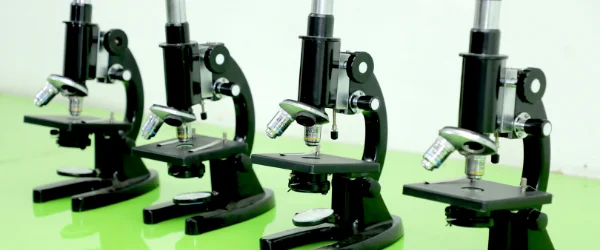
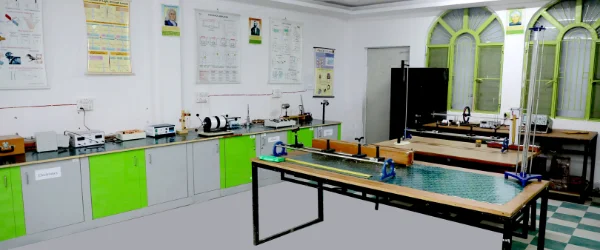
    CBZ practical learning laboratories
    Advanced Conceptual Knowledge

    Learn deeper topics like quantum mechanics, electromagnetism, solid-state physics, nuclear physics, and advanced mathematical methods.

    Strong Research Foundation

    Develop skills in experimentation, data analysis, and scientific reporting—useful for research projects, dissertations, and PhD preparation.

    Practical & Laboratory Skills

    Gain hands-on experience with instruments, measurements, error analysis, simulations, and modern lab techniques used in real research environments.

    Interdisciplinary Applications

    Physics supports fields like electronics, material science, nanotechnology, renewable energy, medical physics, and computational science.

    M.Sc. Physics Course Fee

    Semester fee and examination fee (as per University norms).

    Semester Fee
    Examination Fee
    ₹ 22,500
    As per University Norms

    Explore Your Path to Success - Downloads

    Discover all the essential information to kickstart your journey with us. From detailed Fee Structures to easily accessible Admission Forms and our comprehensive Prospectus, we’ve got everything you need to plan your academic future. Click the buttons below to explore and take the first step toward a brighter tomorrow!

    Career opportunities

    M.Sc Physics opens diverse career opportunities in both public and private sectors. Graduates can work as scientists, research analysts, lab technicians, quality control managers and technical experts in industries and research organisations.

    Jobs in Public and Private Sector

    M.Sc Physics graduates can work in both government and private organisations in technical, scientific and analytical roles.

    Scientific and Technical Roles

    Career options include observation scientist, assistant scientist, laboratory technician, quality control manager and research analyst.

    IT and Software Industry

    Many IT companies such as Infosys, Wipro and TCS hire physics graduates for software, data analysis and technology roles, especially when they have programming skills.

    Research & Development Organisations

    Graduates can work in research institutions like DRDO, Saha Institute of Nuclear Physics (Kolkata) and BARC, contributing to advanced scientific projects.

    Public Sector & Core Industries

    Organisations such as ONGC, BHEL and NTPC offer opportunities in energy, power and engineering sectors for physics post-graduates.

    Frequently Asked Questions

    Important course questions about duration, eligibility, curriculum, practicals, and careers.

    What are the eligibility criteria for admission to the M.Sc. in Physics?

    To be eligible for the M.Sc. in Physics, candidates must have:

    • Bachelor’s degree in Physics or a related field (such as B.Sc. Physics or B.Sc. with Physics as a subject).
    • A minimum percentage requirement of 50-55% in the undergraduate program (this may vary depending on the college).
    • B.Ed and B.sc (Agriculture) is Affiliated with HNB Garhwal Central University(Uttrakhand),
    • M.A. Yoga and PG diploma in Yoga is affiliated with Uttrakhand Sanskrit University,(Haridwar )
    • B.A.B.Com, B.Com(H),BBA, B.Sc(CS PCM CBZ) M.A., M.Com, M.Sc is affiliated with Sri Dev Suman University (Uttrakhand)
    • L.L.B. and B.A. L.L.B. Affiliated to Veer Madho Singh Bhandari Technical University

    The M.Sc. Physics curriculum includes a range of core and elective subjects, such as:

    • Classical Mechanics
    • Quantum Mechanics
    • Electrodynamics
    • Statistical Mechanics
    • Solid State Physics
    • Nuclear Physics
    • Atomic and Molecular Physics
    • Mathematical Physics
    • Electronics and Instrumentation
    • Computational Physics

    Graduates of the M.Sc. in Physics have diverse career opportunities, including:

    • Research Scientist
    • Physicist
    • Academic or Lecturer
    • Lab Technician or Experimental Physicist
    • Data Analyst
    • Scientific Officer
    • Meteorologist
    • Radiation Protection Practitioner
    • Software Developer (in fields like computational physics)
    • Astronomer

    Additionally, graduates can pursue Ph.D. programs or work in research institutes, government organizations, industries, or educational institutions.

    Yes, after completing the M.Sc. in Physics, you can pursue a career in teaching at the college or university level. You can also qualify for teaching positions in schools after completing the B.Ed. program. Additionally, pursuing a NET (National Eligibility Test) qualification allows you to become eligible for lectureship roles in Indian universities and colleges.

    APPLY NOW